Mulshi Waterfall: The Magic Water Garden Near Pune (Full Guide)
Do you love the sound of water? Do you love looking at big, green mountains that look like they are wearing a soft green blanket?...
Read More

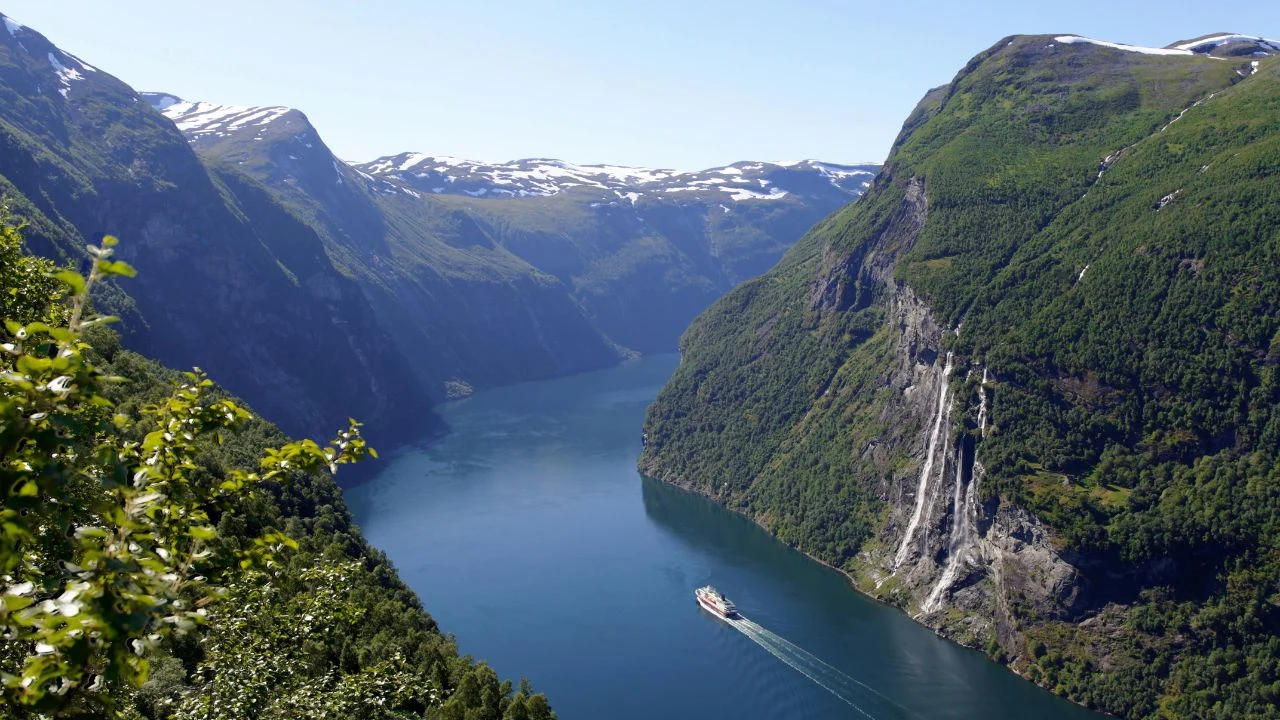
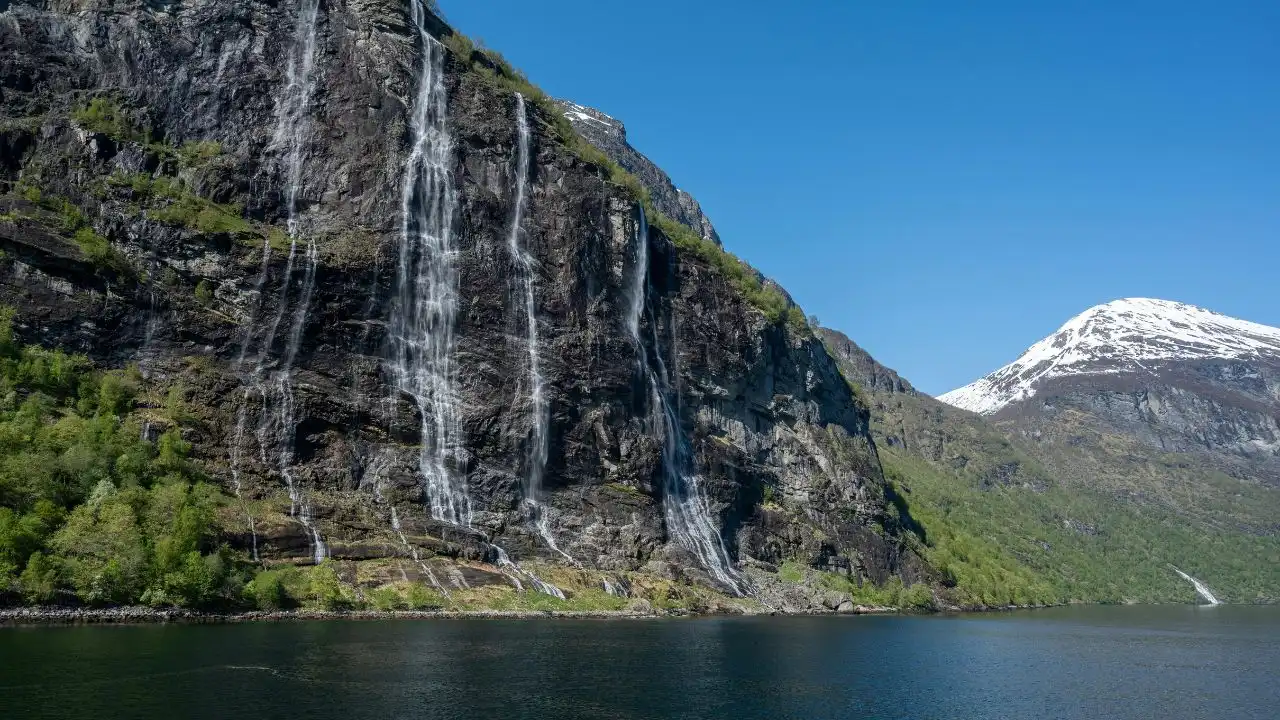
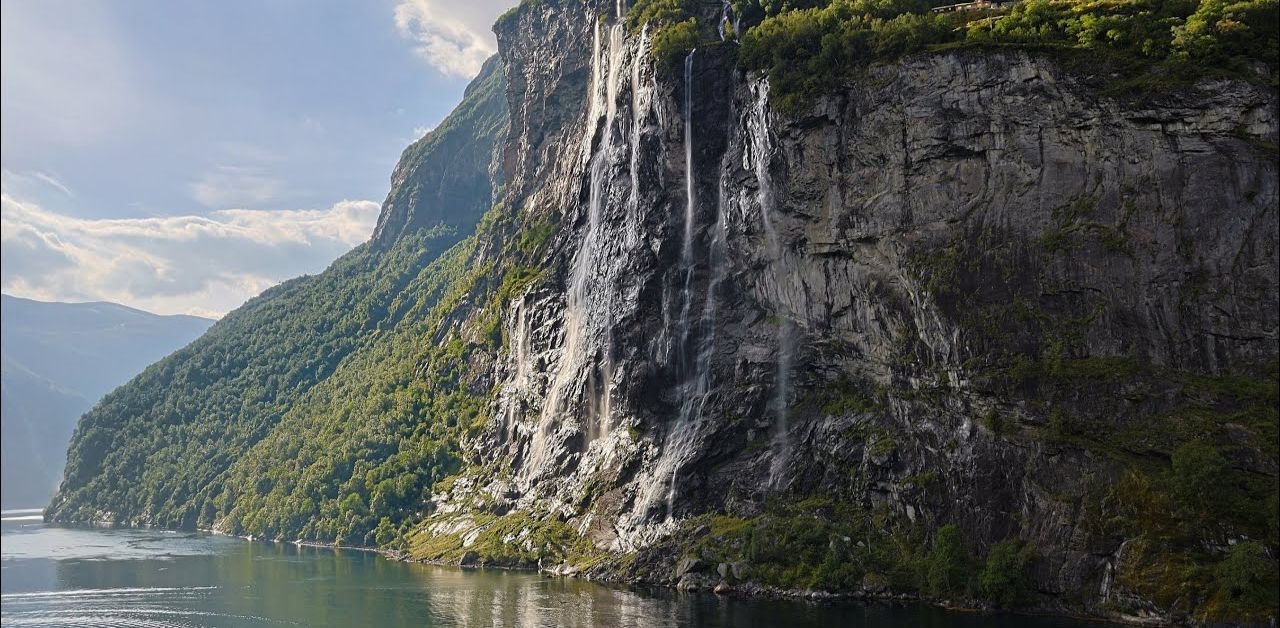


Deep inside Cherrapunji, a place where it rains much harder and a lot more often than almost anywhere else in the whole world, you will find the amazing Seven Sisters Waterfall. Its official name in the local Khasi language is Nohsngithiang Falls, and some people also call it Mawsmai Falls. This beautiful natural sight shows just how wild and powerful nature can be. The water flows over light-colored, rough limestone rocks. It looks like beautiful, flowing white lace set against a background of very dark green plants and trees.
Even though the seven separate streams of water never actually touch each other, they fall together perfectly at the same time. Together, they create a wide and breathtaking curtain of water that hangs tightly to the steep side of the mountain. Every single stream follows its own deep path that has been cut into the rock over time. But when you look at them from far away, they all look like one big, powerful force of nature. A soft white mist is always rising into the air because the ground at the bottom of the valley drinks up so much water. The river pushes very hard, fueled by the heavy rains that this area is famous for. You can often see beautiful rainbows stretching across the sky in the afternoon when the sunlight shines through the billions of falling water drops. The water makes a loud, roaring sound as it falls, filling up every empty space and making the air vibrate between the hills around it.
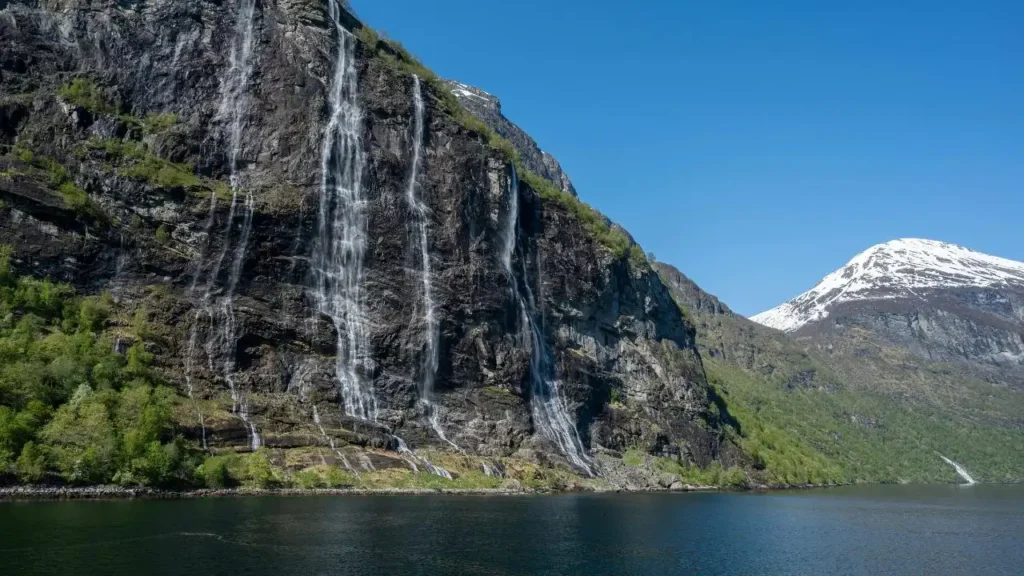
To really understand how wonderful the Seven Sisters Waterfall in Meghalaya is, you need to know about the unique land and rocks in the East Khasi Hills. The high cliffs in this area are made of very old limestone rock. This rock has been carved and shaped over millions of years by rain that never seems to stop. Cherrapunji (which used to be called Sohra) sits on a flat mountain top. This flat top directly faces the wet monsoon winds that blow up from the Bay of Bengal, carrying lots of moisture.
When these rain clouds crash into the high, steep cliffs of the Khasi Hills, they are pushed straight up into the sky. This makes the clouds cool down very fast, and they drop a huge amount of rain all over the land. This very heavy rain falling in one specific area is exactly what creates the waterfalls. The rainwater collects on the flat mountain top and searches for a way down. It finds its way through seven different deep cracks and cuts at the edge of the cliff. This creates the seven separate falling streams that we can see today. The drop from the top to the bottom is huge! It measures a very impressive 315 meters (which is 1,033 feet) high. This makes it one of the tallest waterfalls in all of India. When all the water is flowing during the rainiest season, the waterfall spreads out very wide, covering about seventy meters across the face of the cliff
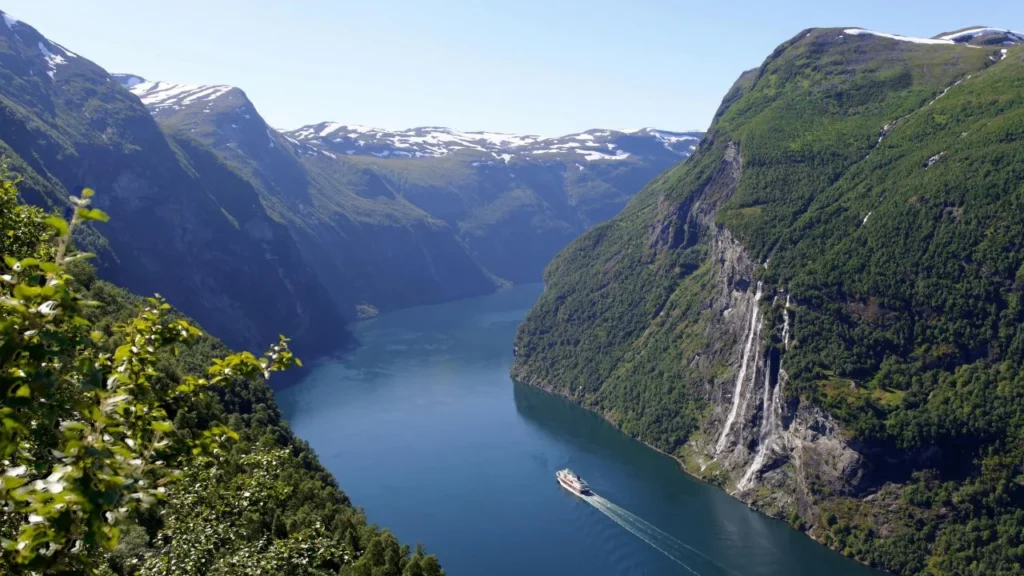
Because India is a very big country with many amazing natural places, the names of places can sometimes confuse travelers when they are planning their trips. For example, many tourists search on the internet for the Seven Sisters Waterfall Sikkim, thinking they will find this exact same massive 315-meter drop there.
It is very important to make it clear that while the state of Sikkim does have a pretty waterfall on the Gangtok-Lachung Highway that is also called the Seven Sisters (because it has multiple levels or steps), it is a completely different place on the map. The waterfall in Sikkim is a stepped waterfall that you can look at from the side of the road. However, the huge, wide-spreading waterfall with seven separate streams that falls into a very deep valley is only found in Cherrapunji, Meghalaya. Knowing this difference helps travelers make sure that their 2026 GPS maps and airplane tickets take them to the right state in northeast India.
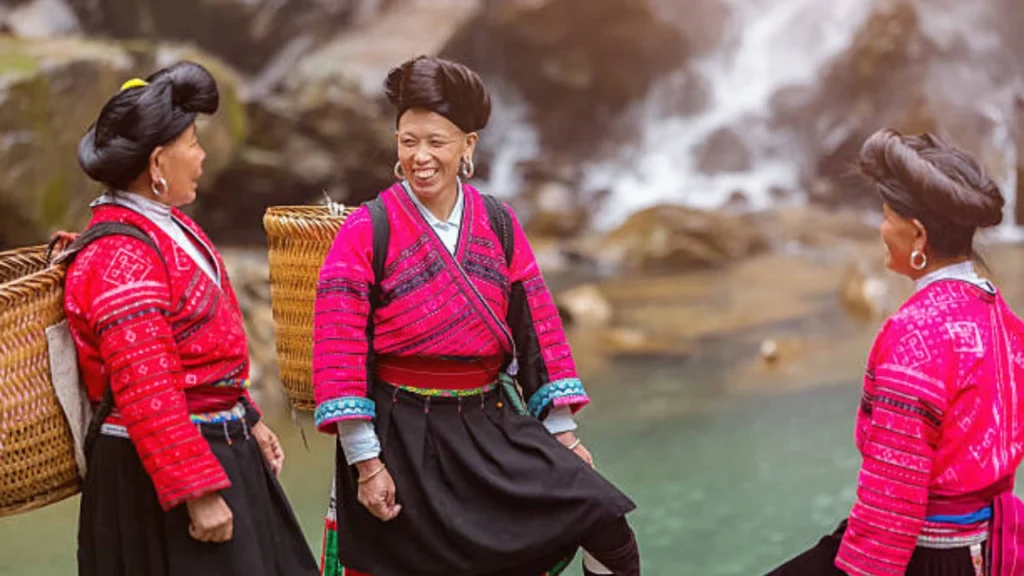
There is a very old and famous story from the local Khasi people about seven beautiful sisters who lived in a village nearby. The story says that a man from a faraway place came to the village, hoping to marry one of the sisters. However, the sisters loved each other very much and had a bond that could not be broken. Instead of letting marriage separate them, they decided to run away together as a group. As they ran right to the edge of the huge cliff, they magically turned into water. Each sister became her own separate stream of water. They still run side-by-side through time without ever joining together. They remain untouched by each other, exactly like the seven separate streams of the waterfall we see today.
This local story shows a quiet and strong power that matches the real-life culture of the Khasi people. Meghalaya is home to one of the very few societies left in the world where the family line follows the mother (this is called a matrilineal society). In this place, a daughter takes her mother’s family name, and women are the most important figures in keeping the family history alive. Land, houses, and family roots are passed down only through the women. This changes how families live and how their society works. The youngest daughter in the family (known as the Khatduh) is usually the one who takes care of the family’s main property and home. When you look at the waterfalls, you are not just looking at water crashing over rocks; you are looking at a place that is deeply connected to the power and lasting importance of women.
Moving away from old stories and looking at modern maps, the seven streams of water are often seen as a natural symbol for the Seven Sister States of northeast India. These states are Assam, Meghalaya, Manipur, Mizoram, Tripura, Nagaland, and Arunachal Pradesh. A long time ago, before there were any modern paved roads, people walking through the thick forests of the Khasi Hills used the loud, thunder-like sound and the huge size of this waterfall as a trusted guide. It helped them find their way along their old walking and trading paths.
The nature around the Seven Sisters Waterfall in Cherrapunji is just as amazing and dramatic as the waterfall itself. The constant wetness in the air creates a special little climate that helps thick, green, leafy forests grow very well.
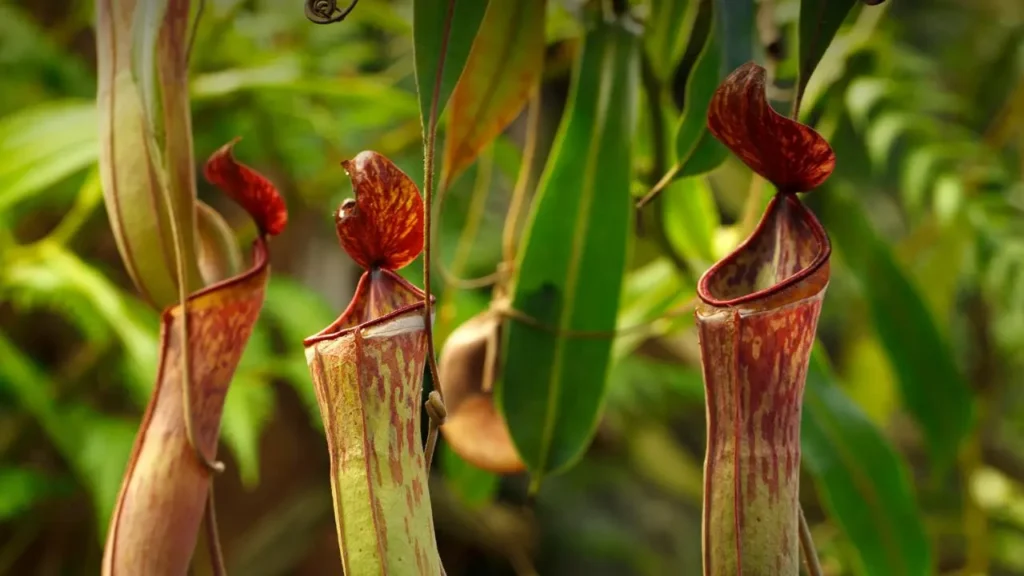
The high cliffs and the forests around them are covered in bright green moss, beautiful and rare orchid flowers, and climbing fern plants. This area is also very famous for a special plant called Nepenthes khasiana. This is a very interesting pitcher plant that actually eats insects! It grows really well in the soil on the mountain top, even though the heavy rain washes many nutrients away.

If you love wild animals, the valleys around the waterfall are full of amazing creatures.You can hear the sounds of rare and beautiful birds, including different kinds of hornbills and the brightly colored Mrs. Hume’s pheasant. Deep inside the thickest parts of the forest where people cannot easily go, shy animals like the clouded leopard and the Himalayan black bear walk around quietly.
Going to Northeast India has become much easier and smoother in recent years. Here is your updated guide on how to travel to the waterfalls today.
The closest place to fly into is Shillong Airport (which is also called Umroi Airport). It is located about 70 kilometers away from Cherrapunji. While there are more flights arriving here in 2026 than before, it mostly connects to big cities like Kolkata and Delhi. The drive in a car from Umroi Airport to the waterfalls takes about two and a half to three hours. If you need more choices for flights from other countries or other parts of India, Lokpriya Gopinath Bordoloi International Airport in the city of Guwahati is the main big airport. It is located about 160 kilometers away. The drive from Guwahati to Cherrapunji is very beautiful to look at. It takes about four to five hours on nice, wide, and well-kept roads.
The state of Meghalaya does not have a big train system because the land is full of very high mountains. The closest major train station is the Guwahati Railway Station in the state of Assam, which is about 150 kilometers away. This station easily connects to all the big cities in India, like Delhi, Mumbai, and Bangalore. Once you get off the train at the station, you can easily pay for a private tourist taxi or get on a public government bus to travel to Cherrapunji.
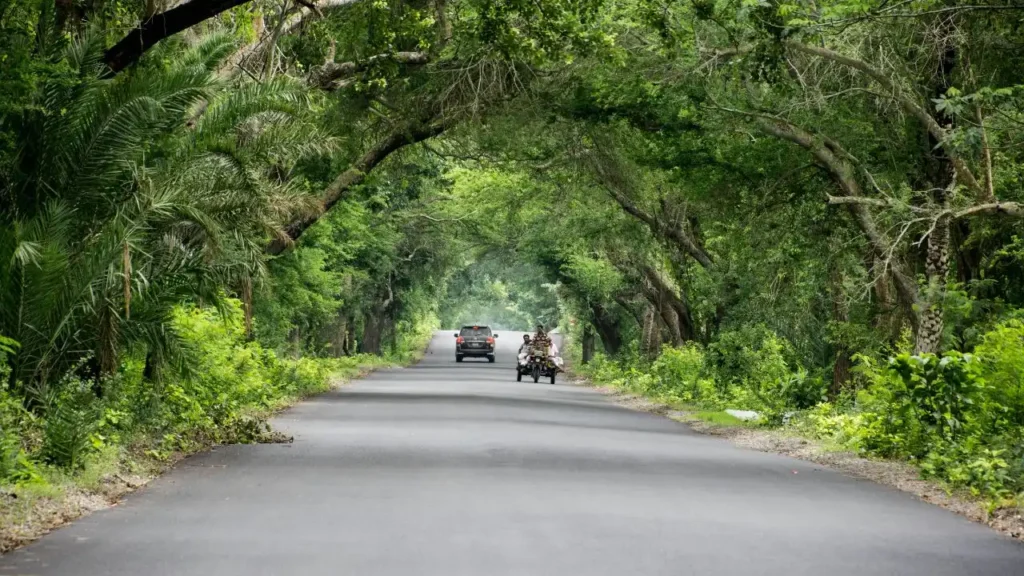
Taking a road trip in a car is the very best way to see the scenery change from busy city buildings to quiet mountains covered in clouds.
If you want to see the waterfall when it is at its most powerful and loud enough to shake the ground, you absolutely must visit during the rainy season (the monsoon). Between the months of June and September, every single one of the seven streams is completely full of rushing water. The land all around changes into a super bright and beautiful shade of green.
Some waterfalls have water flowing all year round, but this specific waterfall relies completely on the rain. Between the months of November and February, the water slows down so much that it becomes just a few very thin lines of water. On some very dry days in the winter, there might be almost no water falling at all. The cliffs still look very pretty, but visitors who are expecting to see loud, rushing water will feel sad and disappointed. However, traveling around India during the rainy season gives you many different choices. If you love seeing big rivers full of rainwater but also like hills that smell like growing coffee, you could compare this trip to visiting the waterfalls in Chikmagalur down in Karnataka state. Those waterfalls are also biggest during the rain, but they are in a very different type of forest called the Western Ghats. Also, if you want to see a very wide river flowing fast over rocks during the rain, the Vazhachal waterfalls in Kerala state give you an amazing view of rushing water inside thick forests. Even so, if you want to see water falling straight down from incredibly high cliffs into valleys full of mist, Meghalaya is the absolute best place to go.
To have the best possible trip to the East Khasi Hills, it is very important to plan out your days. Here are some suggested plans that give you a good mix of exciting adventure and peaceful rest.
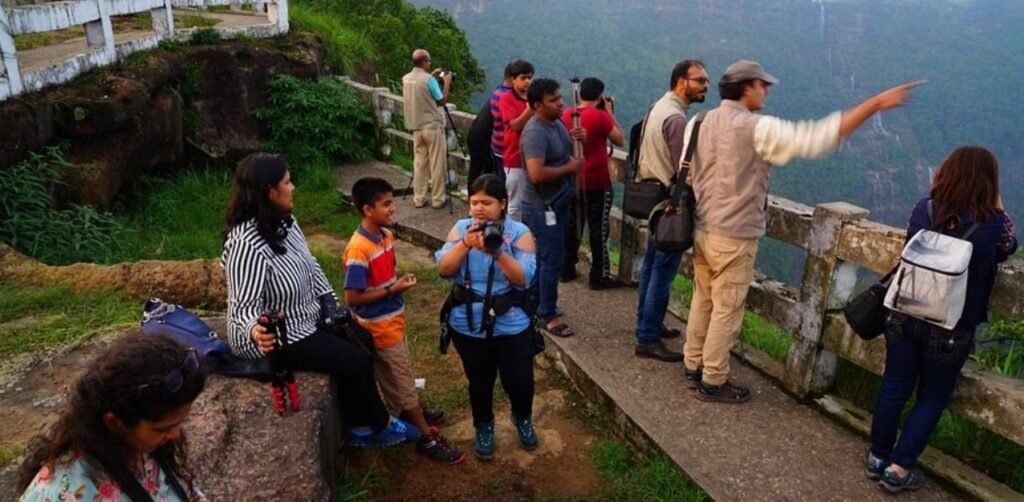
Just past the thick line of trees, the Sohra Eco Park opens up into a very big, clean, and well-kept area for viewing. This wide open space lets you look straight across the deep valley right at all seven flowing streams of water.
Make sure you look around at other things besides just the waterfalls. You might see quick flashes of flying animals moving between the wet leaves. These are the bright and fast movements of pretty birds like sunbirds and minivets. You can also see huge, colorful butterflies flying around the rare flowers on the mountain top. They come out to enjoy the short moments when the sun is warm and bright. If you look toward the south on a day when the sky is clear, you can see where the high hills of Khasi suddenly end. Below them, you can see the totally flat, wet lands and plains of the neighboring country, Sylhet, Bangladesh.
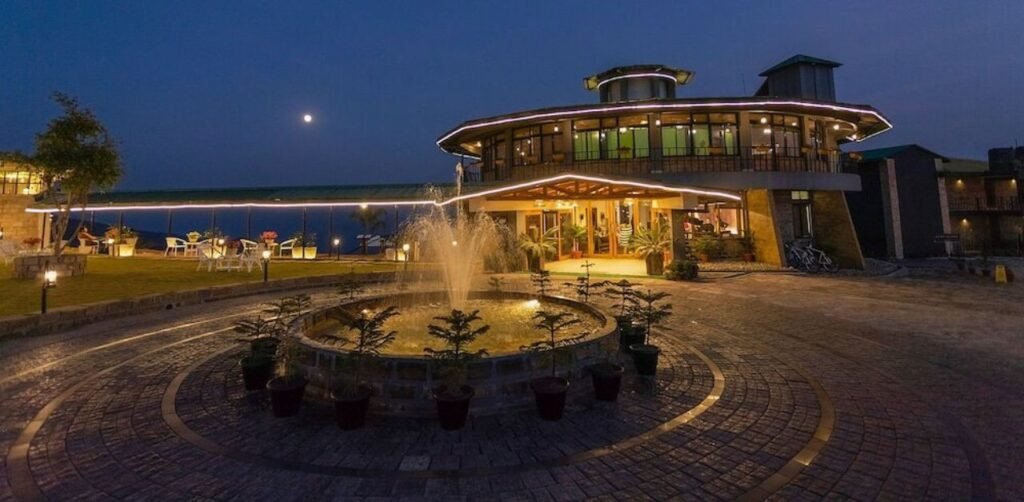
The Polo Cherrapunjee Resort
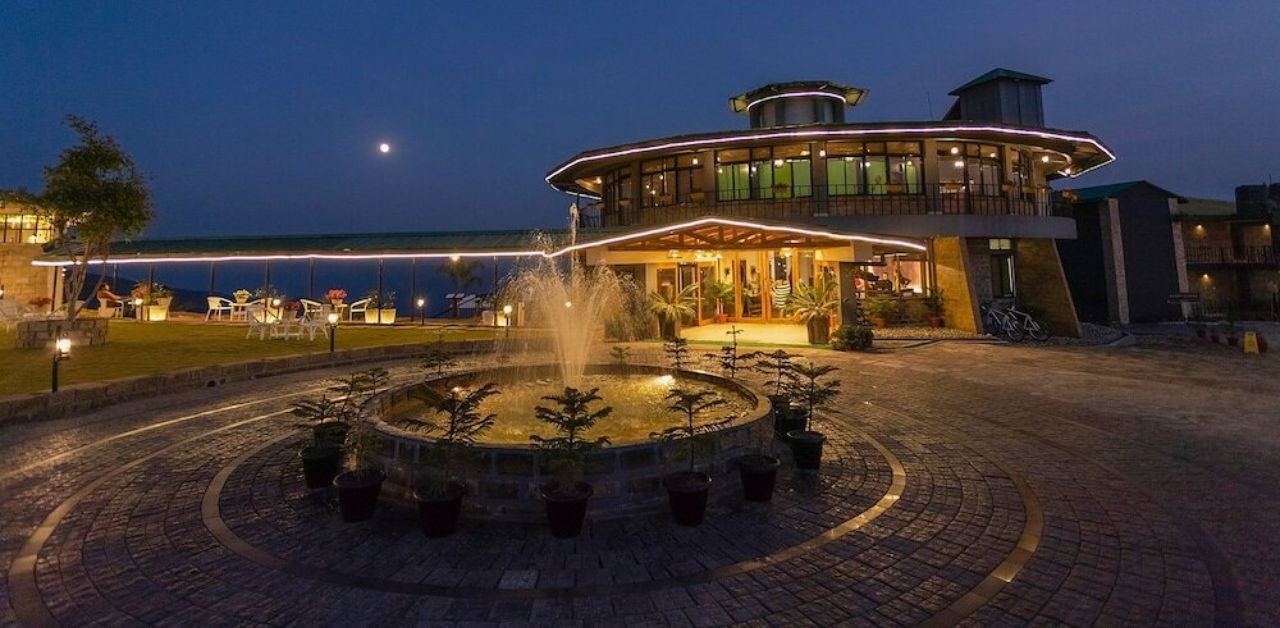
Sitting very close to the waterfalls – only 270 meters away – the Polo Cherrapunjee Resort gives you luxury, five-star comfort. You can see beautiful views of the waterfall from almost every part of the hotel, and there is a swimming pool that looks like it goes on forever into the misty scenery. This place feels incredibly peaceful and is surrounded by the raw, wild energy of nature. Staying here feels special – not because it is shiny and loud, but because it is quiet, classy, and simple. The rooms open up so you can look right out at the green cliffs and the open sky. The people who work there are very helpful but stay out of your way until you need them.
If you are looking for places that cost a medium amount of money, the prices are usually between two thousand and five thousand rupees for each night. Jiva Resort is a great place if you want a very quiet stay. Sulawado is another nice choice if you like having a lot of open, outdoor space. If you want to get away from the noisy city, Coniferous is a hotel that gives you views of the green forest right from your bedroom window. There is also Kutmadan Resort, which is hidden away in a quiet spot but is still very easy to drive to.
If you want to save money, a stay at a smaller place costs between ₹500 and ₹2,000 for each night. You can look for small places like Arara Homestays. Guest houses owned by the local people are a very good choice. Because they are run by the people who live in the community, these places make you feel very grounded and at home. They are not fancy, but they offer simple, good rooms with a nice, local feeling.
Over in the city of Shillong, hotel prices start at about ₹800 for one night, but they can go much higher than ₹10,000 depending on how fancy the hotel is. There is a huge mix of different places to stay for any amount of money you want to spend. This makes Shillong a very easy place to stay if you just want to take quick day trips while the sun is up.
.

Your trip is not truly finished until you have tasted the food from this land. The small local cafes and little food stalls on the side of the road in Cherrapunji serve food that tastes completely different from the food in the rest of India.
If you have made the journey to Cherrapunji, the surrounding landscape holds wonders that deserve equal attention.
Just a short drive of 7.5 kilometers away, Nohkalikai water falls over the edge of the rocks in one single, beautifully scary drop. It falls down 340 meters, which makes it the tallest straight-plunge waterfall in India. The pool of water at the very bottom changes colors all the time. Sometimes it is dark green, and sometimes it is bright blue. It depends on what season it is and how many clouds are in the sky.
Deep down inside the thick jungle valleys, the local Khasi people have carefully trained the thick, twisted roots of the Ficus elastica (rubber tree). They guide these roots to grow across fast-moving rivers to create living, growing bridges that you can walk on. These amazing natural bridges take many years and decades to grow thick and strong enough to hold the weight of people walking on them. It is a quiet, amazing piece of work built completely without using any nails, steel metal, or cement. The rain only gives water to the trees, which makes the roots grow even stronger to fight against the hard monsoon winds as time passes.
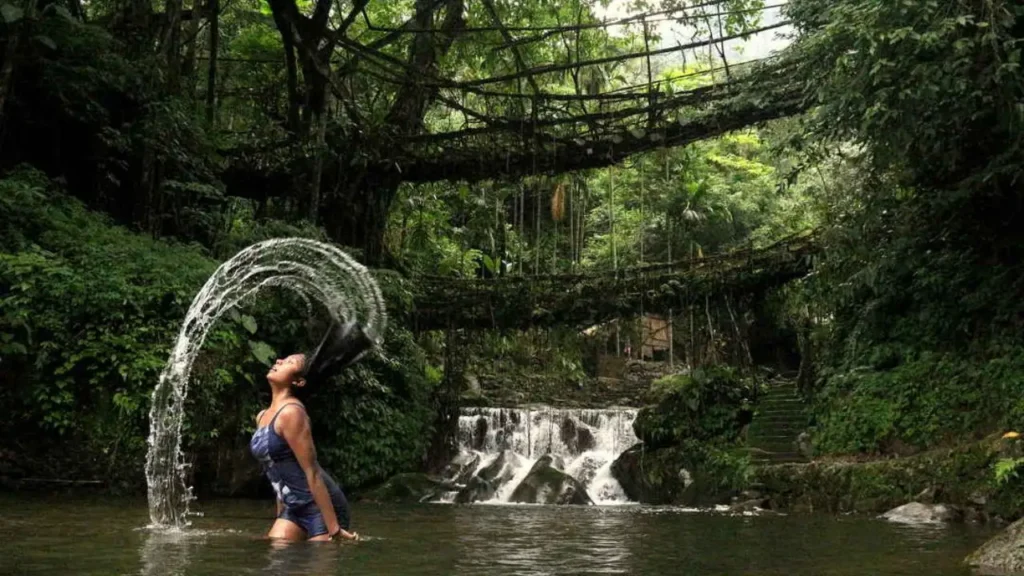
About 90 kilometers away from Cherrapunji is Mawlynnong. This place is very famous because it won an award for being the Cleanest Village in all of Asia. It has beautiful walking paths made of bamboo high up in the trees that give you huge views of the area. A little bit further down the road is the Dawki River, right on the border between India and Bangladesh. During the winter months, this river is famous because the water becomes so perfectly clean and clear that the wooden boats look like they are floating in the empty air.
Deep under the ground, only 6 kilometers away from the waterfalls, you will find the Mawsmai Caves. These long tunnels are made of limestone. Inside, there are pointy rock shapes called stalactites and stalagmites that have grown very, very slowly. Flowing water shaped all of these rocks over thousands and millions of years. When you walk through the paths inside, which have some natural light and lots of shadows, you can feel the cold, wet air blowing through the spaces where very old rivers used to flow under the ground.
Traveling to a region defined by extreme weather requires smart preparation.

The water rushes down the very old rock faces covered in moss at the Seven Sisters Waterfall. It pulls every person who visits into its wild, amazing energy. The beauty you see here is not just because everything is so big. It is also found in the very old stories that families have told for many generations, and in the kind, welcoming smiles of the people who live in these hills. This place shines very brightly as one of the best spots in the whole northeast part of India.
Meghalaya keeps creating more ways for people to travel while still working very hard to protect its special nature. Because of this, 2026 is a very smart and great year to plan your trip here. A vacation during the rainy season is perfect for this place. This is when the bright green hills and the loud, crashing waterfalls show off the Earth looking its absolutely strongest and most beautiful.
Do you love the sound of water? Do you love looking at big, green mountains that look like they are wearing a soft green blanket?...
Read More
Hello travelers! Are you looking for the most beautiful waterfalls in Kochi? You are in the right place! Kochi is a wonderful and busy city...
Read More
Are you ready for some fun in the rain? If you love getting wet, laughing with your friends, and playing in cool water, then Bhushi...
Read More
Have you ever wanted to step inside a real-life fairy tale? Imagine a giant, sparkling wall of water dropping from the sky. Now, imagine that...
Read More
Imagine a place where the water looks like a giant blue slushie. Imagine big green trees that touch the sky. Imagine little fish that like...
Read More
Hello, friend! Are you ready to go on a big adventure? Today, we are going to talk about a place that looks like a dream...
Read More
Have you ever seen a mountain that breathes out white water? Have you ever heard of a Giant Water Slide hidden inside a green forest?...
Read More
Have you ever dreamed of a place that looks like a fairy tale? A place where the water looks like silver ribbons falling from the...
Read More
Hello, traveler! Are you ready for an adventure? Imagine you are walking into a giant, green book of stories. In this story, there is a...
Read More
Have you ever seen a waterfall so big it looks like it is falling straight from the moon? That is exactly what you get to...
Read More
4 Comments