
Kaal Bhairav Temple Ujjain: 2026 Ultimate Travel Guide
Imagine a city so old that even the gods chose to live there. That city is Ujjain.
Nestled on the banks of the holy Shipra River in Madhya Pradesh, Ujjain is one of the seven most sacred cities in all of Hinduism. People call it Mahakal ki Nagri, the City of the Lord of Time. Millions of pilgrims travel here every year to feel something they cannot explain in words: a peace, a power, a presence.
At the heart of this ancient city stands a temple unlike any other, the Kaal Bhairav Temple, Ujjain.
Lord Kaal Bhairav is not just a deity. He is the Guardian and Protector of Ujjain. Think of him as the divine watchman of the city, the one who keeps the city safe, the one who maintains its cosmic order. No important decision in Ujjain has ever been made without first seeking his blessing. Even today, newly appointed government officers in the region visit this temple before joining their duties. That is how deep the faith runs.
The Kaal Bhairav Temple, Ujjain, is special for many reasons. Its history goes back thousands of years. Its rituals are unlike anything you will see anywhere else in India. And its energy, even those who do not believe in God have admitted they felt something powerful inside.
Whether you are a devoted pilgrim, a curious traveler, or someone who simply loves ancient history, this guide will take you through everything you need to know before your visit in 2026.
History and Significance
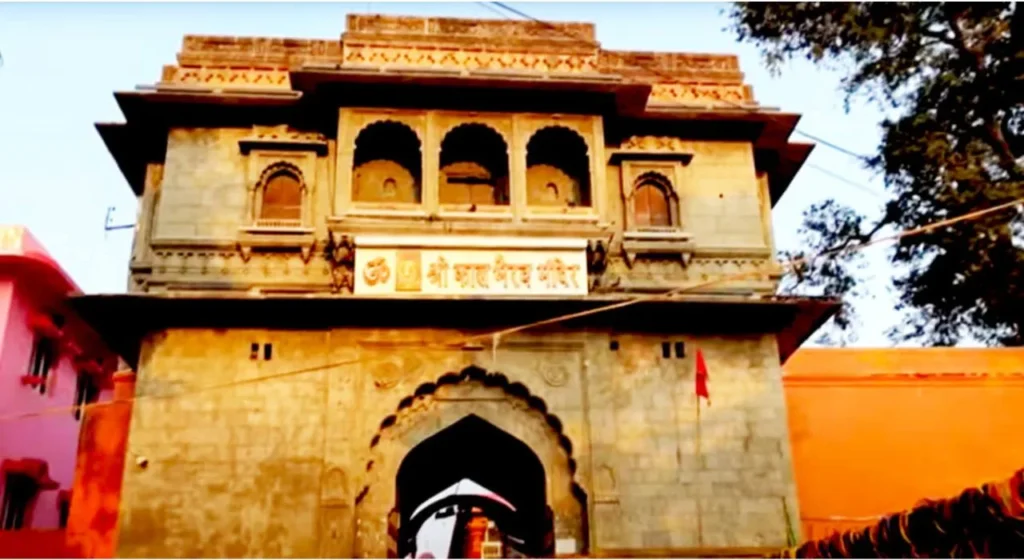
To understand the Kaal Bhairav Temple, Ujjain, you must first understand who Kaal Bhairav is, and the story behind his creation is both powerful and deeply moving.
Long, long ago, according to ancient Hindu scriptures like the Shiva Purana, the creator god Brahma became very arrogant. He claimed he was the greatest of all gods. Lord Shiva, who is calm and patient, became angry at this pride. From his anger, a fierce form was born, Bhairav, which means The Terrifying One.
This form of Shiva was sent to teach Brahma a lesson in humility.
The word Kaal means Time, and also Death. So Kaal Bhairav is the Lord of Time and Death. He is the one who controls the cycle of life. He is fierce, yes, but he is also deeply compassionate to those who surrender to him with a pure heart.
Why is Kaal Bhairav so central to Ujjain specifically? Because ancient texts say that Ujjain was given under his protection by Lord Shiva himself. He was appointed the Kotwal, the Chief Guardian, of the city. This is not just a spiritual belief. It is a living tradition. The keys to the city of Ujjain are symbolically kept at this very temple.
Key facts about the temple’s significance:
- Mentioned in the ancient text Avanti Khanda of the Skanda Purana
- One of the Ashta Bhairav (Eight Bhairav) shrines, this is considered the most powerful
- Worshipped by Tantric practitioners as a supreme deity of the Shaiva tradition
- The temple is believed to be over 1,000 years old, with some historians tracing its origins even further back
Devotees believe that visiting Kaal Bhairav Temple, Ujjain, removes fear, clears obstacles, and brings justice to those who have been wronged.
The Miracle of the Liquor Offering (Madira Prasad)
Of all the things that make the Kaal Bhairav Temple, Ujjain, famous, this is the one that people talk about the most, and for good reason.
Every day, priests and devotees offer Madira (liquor) to Lord Kaal Bhairav. A small cup is brought to the lips of the deity’s idol. And then, it disappears.
Not slowly. Not partially. It simply vanishes.
Scientists have visited. Journalists have filmed it. Skeptics have observed it. And to this day, no one has been able to offer a satisfying natural explanation for where the liquid goes.
Here is what actually happens, step by step:
- A devotee brings a small clay cup or bottle of liquor as an offering
- The priest holds it up to the mouth of the stone idol of Kaal Bhairav
- The liquid is poured or pressed gently against the idol’s lips
- Within moments, the liquid is completely absorbed, leaving no trace, no puddle, no dripping
The idol is made of stone. Stone does not drink. And yet, thousands of people witness this every single day.
Important things to understand about this ritual:
- This is not a trick or performance, it is an ancient, documented tradition
- The offering of Madira is considered a sacred Prasad (divine gift) in this particular tradition of Tantric Shaivism
- Other items are also offered, including sweets and flowers, but Madira is the most well-known
- Visitors are not required to offer liquor, many offer flowers, coconuts, or incense instead
- The tradition is treated with full religious seriousness and respect by the priests and local community
Whether you believe in miracles or not, witnessing this ritual at the Kaal Bhairav Temple, Ujjain, is something that stays with you long after you leave the temple gates.
Architecture and What to See
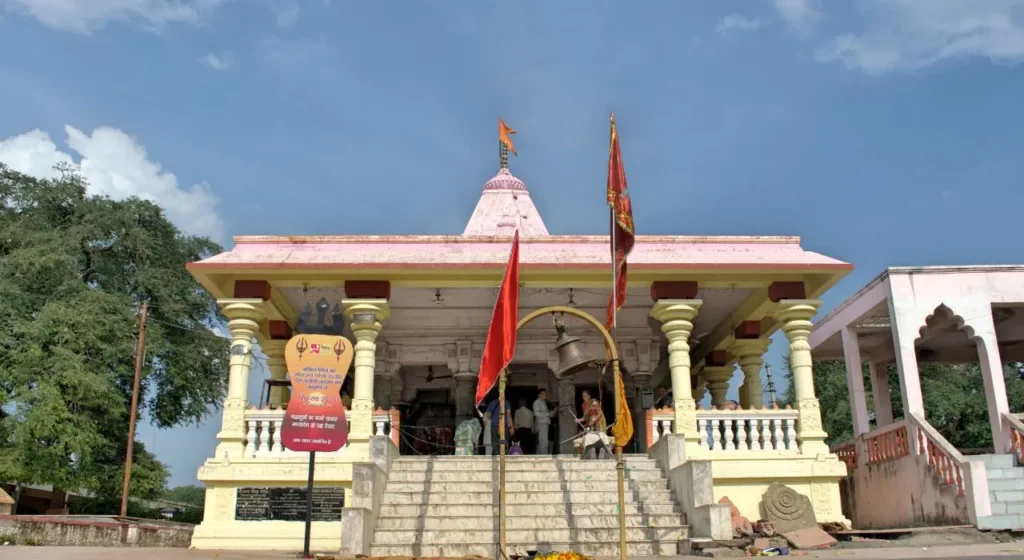
The Kaal Bhairav Temple, Ujjain, may not be the largest temple in India, but what it lacks in size, it more than makes up for in atmosphere, beauty, and detail.
The temple follows the Maratha style of architecture, a style that became popular in central India during the 18th century under the Maratha rulers who were great patrons of Hindu temples. The structure is compact but powerful, with strong lines, a well-defined shikhara (spire), and a courtyard that draws you naturally toward the main sanctum.
What you will see when you visit:
- The Main Sanctum (Garbhagriha): This is where the idol of Lord Kaal Bhairav is enshrined. The idol is decorated with garlands, sindoor (vermillion), and silver ornaments. The atmosphere inside is intense and deeply devotional.
- The Shikhara (Temple Spire): Rising above the sanctum, the spire is traditional in form, painted in bright colours, and visible from a distance as you approach the temple.
- Wall Paintings and Murals: Featured traditional paintings are made on inner walls of the temple from Shaiva mythology. These paintings are done in bold, earthy colours, ochre, red, black, and gold, and they tell the stories of Bhairav in a visual language that anyone can understand.
- The Temple Courtyard: The open courtyard surrounding the main shrine is always alive with activity, priests chanting, devotees offering prayers, the smell of incense mixing with marigold flowers. Stalls around the courtyard sell offerings, religious items, and small souvenirs.
- The Bhairav Kund: Near the temple complex, there is a small sacred tank (kund) associated with the deity. Many devotees take a moment to pray here before entering the main temple.
The temple does not overwhelm you with grand scale, instead, it draws you inward with its energy, its colours, and its living, breathing devotion.
Best Time to Visit
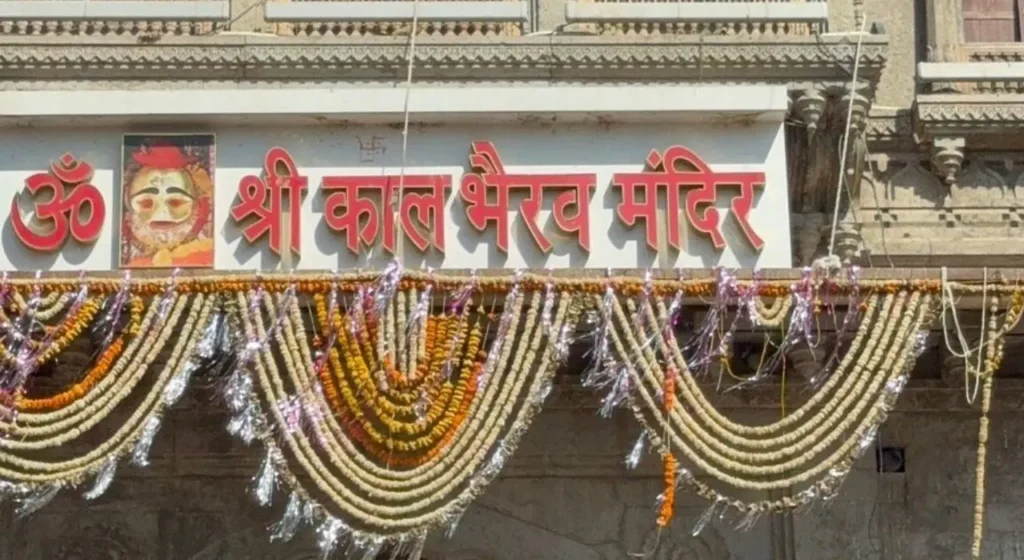
Ujjain is a city that never truly sleeps, pilgrims arrive every single day of the year. But if you want the best experience at the Kaal Bhairav Temple, Ujjain, choosing the right time makes a big difference.
Season-wise Breakdown:
- October to March (Best Season): This is the most comfortable time to visit. The weather in Ujjain is very pleasant and peaceful. Temperatures stay between 10°C and 25°C. Walking around the temple, the ghats, and nearby sites is enjoyable. This is when most tourists and pilgrims plan their trips.
- April to June (Hot Season): Ujjain gets very hot during summer, temperatures can touch 42°C or above. If you must visit during this time, plan your darshan early in the morning before 8 AM to avoid the peak heat.
- July to September (Monsoon Season): The rains make Ujjain look lush and beautiful. The Shipra River fills up and the city feels alive. However, heavy rains can sometimes cause crowds and travel delays. If you enjoy the monsoon atmosphere and don’t mind getting wet, this season has its own magic.
Special Festivals in 2026, Do Not Miss:
- Kaal Bhairav Jayanti (2026): This is the birthday of Lord Kaal Bhairav, celebrated on the Krishna Ashtami of Margashirsha month. In 2026, this falls in late November. The temple is decorated magnificently, and special rituals are performed through the night. This is the single most powerful day to visit.
- Mahashivratri 2026 (February 26, 2026): Although this festival is centered at the Mahakaleshwar Temple, the entire city of Ujjain, including Kaal Bhairav Temple, comes alive with celebration. Night-long prayers, massive crowds, and an electric spiritual atmosphere make this an unforgettable experience.
- Kartik Purnima: Celebrated in November, this full moon night sees thousands gather at the Shipra Ghats and visit the Kaal Bhairav Temple for special prayers.
Pro Tip: If you are visiting during a major festival, book your accommodation at least 4 to 6 weeks in advance. The city fills up very quickly.
How to Reach
Ujjain is very well connected to the rest of India, and reaching the Kaal Bhairav Temple, Ujjain, is straightforward once you arrive in the city.
By Air, Nearest Airport:
The closest airport is Devi Ahilya Bai Holkar Airport, Indore (IDR), located approximately 55 kilometres from Ujjain. Indore has good flight connections from major Indian cities like Delhi, Mumbai, Bangalore, Hyderabad, and Pune.
- From Indore Airport, you can hire a taxi or cab to Ujjain, the ride takes about 1 to 1.5 hours depending on traffic
- App-based cabs like Ola and Uber are available at the airport
- Shared cabs and buses also run between Indore and Ujjain at lower costs
By Train, Ujjain Junction:
This is the most popular and affordable way to reach Ujjain. Ujjain Junction (UJN) is a main railway station with direct trains from:
- Delhi — Malwa Express, Avantika Express
- Mumbai — Avantika Express
- Bhopal — Multiple daily trains
- Indore — Frequent trains, journey under 1.5 hours
- Jaipur, Ahmedabad, Nagpur — Well-connected routes
From Ujjain Junction, the Kaal Bhairav Temple is only 3 to 4 kilometres away. Auto-rickshaws, e-rickshaws, and taxis are easily available outside the station.
By Road
Ujjain has excellent road connectivity. The city is connected to the national highway network and is easily reachable by:
- State buses from Indore, Bhopal, Dewas, Ratlam, and other nearby cities, the Ujjain Bus Stand is centrally located
- Private taxis and self-drive cars from Indore are a comfortable option, especially for families
- The road from Indore to Ujjain (NH 752D) is smooth and well-maintained
Getting Around Inside Ujjain:
- Auto-rickshaws are the most common way to travel within the city, always agree on the fare before boarding
- E-rickshaws are cheap and good for short distances
- Tempo/shared autos run on fixed routes and are very economical
- The Kaal Bhairav Temple is located in the Bharatpuri area of Ujjain, any local auto driver will know exactly where it is
Darshan Timings & Rules
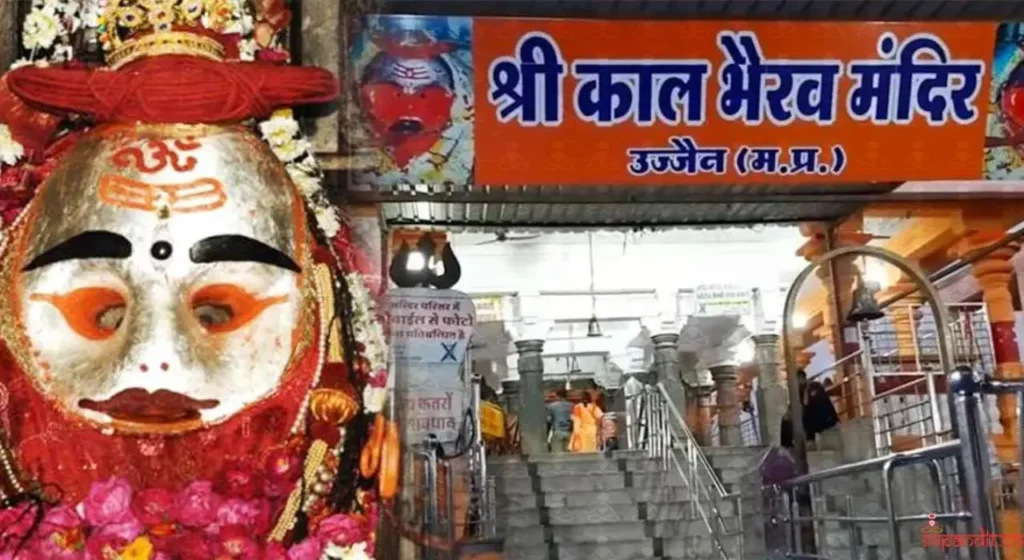
Planning your visit to the Kaal Bhairav Temple, Ujjain, requires knowing the darshan timings and the rules of the temple. Following these shows respect, and helps you have a smooth, peaceful experience.
Darshan Timings (2026):
| Time Slot | Details |
| Morning Opening | 6:00 AM |
| Afternoon Break | Approx. 12:00 PM – 4:00 PM (limited access) |
| Evening Darshan | 4:00 PM onwards |
| Night Closing | 11:00 PM |
Note: Timings may change during festivals like Mahashivratri and Kaal Bhairav Jayanti, when the temple often stays open through the entire night. Always confirm current timings locally before visiting.
Best Time for Darshan: Early morning between 6:00 AM and 8:00 AM, crowds are smaller, the atmosphere is calm, and the morning aarti is a beautiful experience.
✅ What You Should Do:
- Remove your footwear before entering the temple premises, shoe stands are available outside
- Dress modestly, wear traditional or simple clothing. Avoid shorts and sleeveless tops
- Carry your own offering items if you wish, marigold garlands, coconut, incense sticks, or Madira (available from stalls outside)
- Maintain silence and calm inside the main sanctum
- Photography is restricted inside, always ask or check the board before taking photos
- Children are welcome, but keep them calm and close to you
❌ What You Should Not Do:
- Do not carry leather items (belts, bags, wallets) inside the main sanctum, leather is considered impure in this tradition
- Do not touch the idol without permission from the priest
- Do not push or rush during crowded darshan, be patient and respectful
- Do not drink alcohol or non-veg food before going to the temple
- Do not make loud phone calls or play music inside the premises
Special Note on the Madira Offering: If you wish to offer Madira as prasad, you may purchase a small bottle from the stalls outside the temple. The priests will guide you through the ritual properly. It is completely optional.
Where to Stay Nearby
Ujjain has grown significantly as a pilgrimage destination, especially after the development of the Mahakal Corridor, and accommodation options today are better than ever, for every type of traveller and every budget.
Budget Accommodation, Dharamshalas and Ashrams:
For pilgrims who want a simple, affordable, and spiritually immersive stay, Ujjain has many dharamshalas (pilgrim rest houses) and ashrams:
- ISKCON Ujjain Guest House, Clean, vegetarian meals, peaceful environment
- Dharamshalas near Mahakaleshwar Temple, Several trusts and religious organisations run affordable rooms close to the main temple zone
- These options typically cost between ₹300 to ₹800 per night and fill up fast during festivals, book early
Mid-Range Hotels:
- Several clean, comfortable hotels are available in the Dewas Gate, Freeganj, and Mahakal Corridor area, all within 10 to 20 minutes of the Kaal Bhairav Temple
- Look for hotels with rooftop views of the Shipra River for an added experience
- Average cost: ₹1,200 to ₹3,500 per night
- Popular options include Hotel Grand Tower, Hotel Anjushree, and Hotel Shipra Residency
Premium and Heritage Stays:
- The growth of religious tourism has brought several well-managed 3-star and 4-star properties to Ujjain
- The Lalit Laxmi Vilas Palace, Indore (55 km away) is a luxury option if you prefer a more upscale base
- Ujjain itself now has comfortable business hotels near the Mahakal Corridor catering to upmarket pilgrims
Location Tip: The best area to stay is near the Mahakal Corridor or Freeganj, this puts you within easy reach of both Mahakaleshwar Temple and the Kaal Bhairav Temple, Ujjain, without needing to travel far.
Places to Visit Nearby
Ujjain is not just a temple city, it is an entire universe of spiritual and historical wonders packed into one place. Once you have visited the Kaal Bhairav Temple, Ujjain, these nearby sites are absolutely worth your time.
1. Mahakaleshwar Jyotirlinga Temple (1.5 km away)
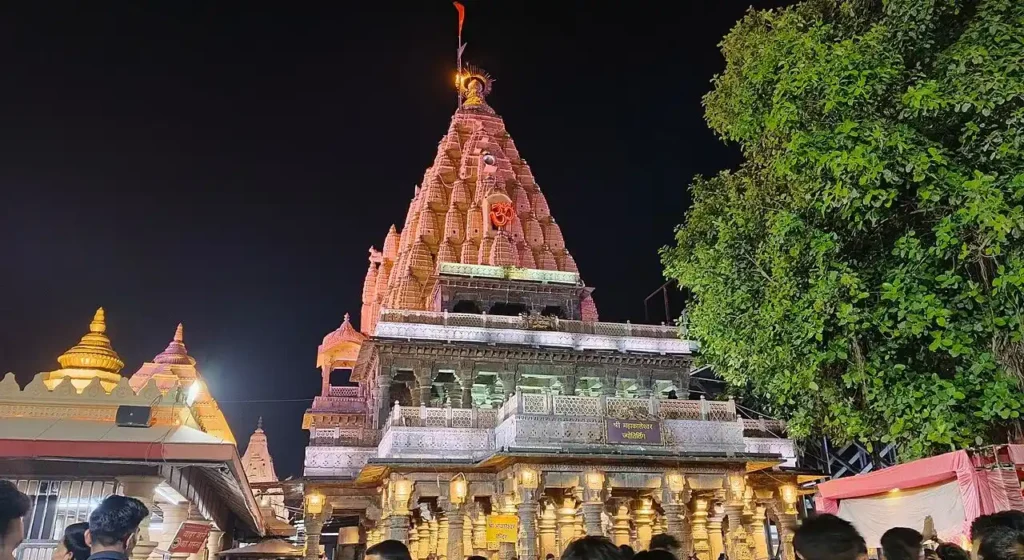
This is the crown jewel of Ujjain, one of the 12 Jyotirlingas in India, which are considered the most sacred Shiva shrines in the entire country. The Mahakaleshwar Temple is the only Jyotirlinga that faces south (Dakshinamukhi), which gives it a unique spiritual power according to Hindu tradition.
- The famous Bhasma Aarti (ash prayer ceremony) takes place here every morning before sunrise, witnessing it is a life-changing experience
- The newly developed Mahakal Corridor (Mahakal Lok) surrounds the temple, a grand walkway lined with 190+ sculpted panels and statues depicting stories from Shiva’s life, stretching nearly 900 metres
- Plan at least 2 to 3 hours here
2. Harsiddhi Temple (1 km from Mahakaleshwar)
Harsiddhi Temple is one of the 51 Shakti Peethas, places where parts of the goddess Sati’s body are said to have fallen to earth. This makes it one of the most powerful goddess temples in India.
- The presiding deity is Goddess Harsiddhi, who is worshipped as a form of Annapurna and Mahalakshmi
- The temple is famous for its two large oil lamp pillars (deepmala), during Navratri, all the lamps are lit simultaneously, creating a breathtaking sea of fire and light
- The architecture is Maratha-style and very photogenic, especially at dusk
3. Ram Ghat and the Shipra River Ghats (2 km away)
The Shipra River is the lifeline of Ujjain, sacred, ancient, and deeply tied to every ritual performed in the city.
- Ram Ghat is the most important of all the ghats, where the grand Kumbh Mela (held every 12 years, next in 2028) traditionally takes place
- Every evening, a beautiful Shipra Aarti is performed at the ghat, lamps are floated on the river as priests chant prayers, very similar to the Ganga Aarti at Varanasi
- Taking a dip in the Shipra River is considered highly purifying, especially during festival times
- The ghats are perfect for a quiet early morning walk
4. Kal Bhairav Mandir to Chintaman Ganesh Temple (3 km)
Just a short ride from the Kaal Bhairav Temple, Ujjain, the Chintaman Ganesh Temple is one of the oldest Ganesh temples in India. It is believed that worshipping here removes all worries (chinta) from a person’s life. Many pilgrims include this in their Ujjain circuit.
5. Jantar Mantar, Ujjain (Vedh Shala)
Ujjain has historically been the zero meridian of Indian astronomy, the city that ancient Indian astronomers used as their central reference point for calculating time and planetary positions.
- The Vedh Shala (Observatory) built by Maharaja Jai Singh II in the 18th century houses ancient astronomical instruments
- It is a UNESCO-recognised scientific heritage site and a wonderful blend of science and history
- Perfect for visitors who want to explore Ujjain beyond its spiritual identity
Practical Tips for First-Time Visitors
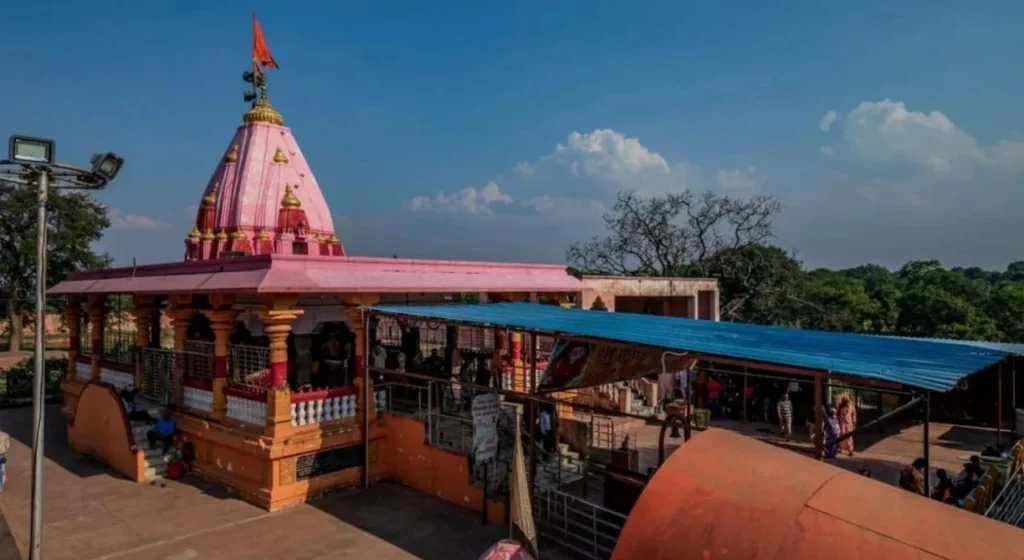
Visiting the Kaal Bhairav Temple, Ujjain, for the first time is a wonderful experience, but a little preparation goes a long way. Here are honest, practical tips that most travel blogs do not tell you.
Footwear and Walking:
- You will be removing your shoes frequently, at every temple. Wear slip-on sandals or simple chappals rather than laced shoes. It saves a lot of time and effort.
- The temple area involves quite a bit of walking on uneven stone surfaces. Comfortable, flat footwear is essential.
Timing Your Visit to Avoid Crowds:
- The busiest times at the Kaal Bhairav Temple, Ujjain, are Monday mornings, Ekadashi, Ashtami, and all major festival days
- If you want a calm, crowd-free darshan, visit on a Tuesday or Wednesday morning between 6:30 AM and 8:00 AM
- During the Mahakal Corridor evening hours (after 7 PM), the lanes between the two major temples get very crowded, keep children and elderly family members close
Local Transport Tips:
- Always agree on the auto fare before boarding, Ujjain autos do not always use meters. A fair rate from the railway station to Kaal Bhairav Temple is approximately ₹60 to ₹100
- E-rickshaws are cheaper for short distances but may not take luggage
- For a full day of temple hopping, hiring a local taxi for the day (₹800 to ₹1,500) is often the most convenient option for families
Health and Hygiene:
- Carry a small hand sanitiser and a handkerchief, temple floors and crowded areas can be dusty
- Drink only bottled or filtered water, avoid tap water and uncovered street food, especially in summer
- The sun in Ujjain can be strong, carry a small umbrella or cap if visiting between 10 AM and 4 PM
Money and Shopping:
- Carry cash in small denominations, most prasad stalls, auto drivers, and dharamshalas do not accept digital payments
- Outside the Kaal Bhairav Temple, Ujjain, you will find stalls selling religious items, Rudraksha beads, local handicrafts, and the famous Ujjaini sarees, these make wonderful souvenirs
- Be polite but firm with vendors, friendly bargaining is normal and expected
Safety and General Awareness:
Keep your valuables (phone, wallet, passport) in a front pocket or zipped bag in crowded areas
Travelling as a solo woman is generally safe in Ujjain, the city is heavily visited and well-patrolled, especially around major temples. However, carry a charged phone and stay in well-lit areas after dark.
If you feel lost or confused, the temple trust offices near Mahakaleshwar are helpful and usually have English-speaking staff
Spiritual Etiquette:
Approach every temple with an open heart and a quiet mind, the energy of these places responds to sincerity
Even if you are not religious, be respectful of those who are, this means no loud conversations, no mocking of rituals, and no disruptive photography
Giving a small donation to the temple trust (daan) is a wonderful gesture and directly supports the upkeep of these ancient sacred spaces
Frequently Asked Questions (FAQs)
Q1. Is the Kaal Bhairav Temple, Ujjain, open every day of the year?
Yes, the temple is open every single day of the year without exception, including national holidays. The only change that happens is the timing, which may extend during festivals or be slightly adjusted during special rituals. It is always best to confirm the current day’s schedule with the temple trust or your hotel before visiting.
Q2. Is it compulsory to offer liquor (Madira) at the Kaal Bhairav Temple?
Absolutely not. Offering Madira is a traditional ritual that has been practiced for centuries, but it is entirely optional for visitors. Many devotees offer flowers, coconuts, incense, sweets, or simply folded hands in prayer. You will not be asked or pressured to offer anything you are not comfortable with. The spirit of the visit is devotion, not any specific offering.
Q3. Can non-Hindus visit the Kaal Bhairav Temple, Ujjain?
Yes, people of all faiths and backgrounds are welcome to visit the temple. India’s temple culture is generally open and inclusive. Non-Hindu visitors are expected to follow the same rules as everyone else, remove footwear, dress modestly, and behave respectfully. The experience of the temple’s atmosphere and rituals is universal and deeply moving for people of any background.
Q4. How much time should I set aside for visiting the Kaal Bhairav Temple?
For the temple itself, allow 45 minutes to 1.5 hours depending on crowd levels. If you arrive during a busy period, the queue for darshan can be longer. If you are combining your visit with nearby sites like Mahakaleshwar, Harsiddhi, and the Shipra Ghats, plan for a full day in Ujjain.
Q5. Is there a dress code for the Kaal Bhairav Temple, Ujjain?
There is no strict printed dress code, but modest traditional clothing is strongly recommended and widely expected. For women, a salwar kameez, saree, or covered top and bottom is ideal. For men, a kurta-pyjama or clean shirt and trousers works well. Avoid shorts, sleeveless tops, ripped clothing, or anything that may appear disrespectful in a sacred setting.
Q6. What is the best way to combine a visit to Kaal Bhairav Temple with the Mahakal Corridor?
The smartest plan for a one-day Ujjain circuit is:
- Early morning (6:00–7:30 AM): Bhasma Aarti at Mahakaleshwar Temple (pre-booking required)
- Morning (8:00–9:30 AM): Darshan at Kaal Bhairav Temple, Ujjain
- Late morning (10:00–11:30 AM): Harsiddhi Temple and Shipra River Ghat walk
- Afternoon: Rest, lunch, and local exploration
- Evening (7:00–9:00 PM): Mahakal Corridor evening light show and Shipra Aarti
This gives you the full spiritual experience of Ujjain in one deeply satisfying day.
Conclusion: A City That Stays With You Forever
The Kaal Bhairav Temple, Ujjain, is not just a place you visit, it is a place that visits you. Long after you have returned home, something about it remains. Maybe it is the sound of the bells. Maybe it is the unexplained quiet that settles in your chest when you stand before the idol of the great Guardian.
Ujjain has been sacred for thousands of years, and it will remain sacred for thousands more. In a world that moves very fast, this city invites you to slow down, to look inward, and to remember that some things are far older and far greater than any of us.
Whenever you are ready to make this journey, whether it is your first time or your tenth, the city will be waiting. And Kaal Bhairav, the eternal Guardian, will be right there at his post.